
Field trip report
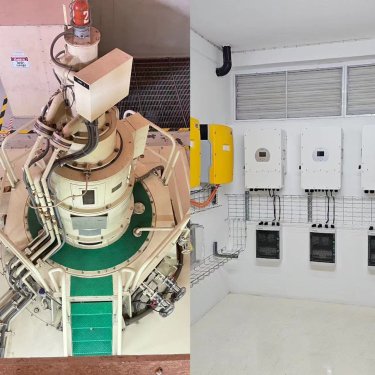
1.Visiting Mae Ngat Dam and learning about solar power generation on water as well as visiting the power plant gave me an in-depth understanding of the electricity supply industry. First, I learned the principles of hydropower and the technical details of solar power generation on water. Hydroelectric power uses the energy of water flow to […]
1.Visiting Mae Ngat Dam and learning about solar power generation on water as well as visiting the power plant gave me an in-depth understanding of the electricity supply industry. First, I learned the principles of hydropower and the technical details of solar power generation on water. Hydroelectric power uses the energy of water flow to drive a turbine generator to produce electricity, while above-water solar power uses solar photovoltaic panels to convert solar energy into electricity. The use of these two renewable energy sources adds sustainability and environmental protection to Thailand’s electricity supply, helping to reduce dependence on fossil fuels and lower carbon emissions.
Secondly, I learned that EGAT (Electric Power Industry Corporation of Thailand) is committed to providing reliable electricity service to all citizens. EGAT plays an important role in the power supply industry, ensuring the stability and efficiency of the power supply through continuous improvements in technology and management. This concept of universal electricity service helps to promote social and economic development and improve people’s living standards.
While studying the Electricity supply industry, I also learned about ESI (Electricity Generating Authority of Thailand) and ERC (Energy Regulatory Commission). The role of agencies such as the Energy Regulatory Commission in the Thai electricity market. ESI is Thailand’s leading power producer, responsible for generating and transmitting electricity and providing electricity services throughout the country. The ERC is the body responsible for overseeing and regulating the Thai electricity market to ensure fairness, transparency and compliance in the supply of electricity.
2.Visiting the Phi Suea House project in Chiang Mai and listening to their presentation gave me a deeper understanding of renewable energy and energy efficiency. Through their introduction, I learned that the Phi Suea House project utilizes renewable energy sources such as solar energy to generate electricity, and has adopted a series of energy efficiency measures to minimize energy consumption and carbon emissions.
Learning about the renewable energy technologies used in the Phi Suea House project, such as solar photovoltaic panels and hydropower technology, made me realize the importance of renewable energy in reducing dependence on traditional energy sources, lowering carbon emissions and protecting the environment. The focus on energy efficiency further emphasizes the importance of rational use of energy, through adopting energy-saving measures and optimizing energy use, energy waste can be minimized, so as to achieve sustainable development goals.
During a tour of the studio and power station, I was struck by the solar panels that covered each roof. This vision made me realize more deeply the potential of solar technology and the wide range of applications. By using Spaces such as the roof of the House to arrange solar panels, Phi Suea House takes full advantage of renewable energy resources, provides a reliable electricity supply to the Chiang Mai area, and plays an important role in reducing carbon emissions.
Finally, I was encouraged to learn about the amount of energy saved and CO2 emissions reduced by the Phi Suea House project. This shows that the application of renewable energy and energy efficiency measures can achieve significant environmental and economic benefits and make a positive contribution to the sustainable development of society.
This article is a part of the class
“751447 SEM IN CUR ECON PROB”
supervised by
Asst. Prof. Napon Hongsakulvasu
Faculty of Economics,
Chiang Mai University
This article was written by Lu Liu 631615511
